Special Report · Time-Sensitive
Most Americans Are Unprepared for the Next Blackout. This $200 DIY Device Is Replacing $8,000 Generators.
A 130-year-old backup-power invention — buried in a patent file the utility industry hoped you'd never open — is quietly helping everyday Americans keep their homes running when the grid goes down. No $8,000 generator. No rooftop solar. No electrician. Just hardware-store parts and one weekend.
Free presentation · No email required · May be pulled at any time

By J. Reeves · Staff Writer
Home & Energy Desk · Updated today
Warning: This Video May
Make Your Generator Feel Obsolete
* VIEWER DISCRETION ADVISED
▶ Watch Before It's RemovedContent may be removed at the request of utility partners
When the storm hit central Ohio last winter, the lights went out for 127,000 homes. Temperatures dropped to 19 degrees. Water pipes froze. Cell towers overloaded. And at the Miller house — a modest ranch on the edge of town — the lights stayed on.
Not because they owned a $8,000 generator. Not because they had a $30,000 solar+battery system. But because Jim Miller, a 61-year-old retired auto mechanic, had spent one Saturday in his garage building a small backup-power unit from a digital blueprint and about $200 in hardware-store parts.
"My neighbors were hauling extension cords to their cars and running engines all night," he told me. "We had the fridge, the furnace fan, the lights, and the phone chargers running. My wife finally stopped giving me a hard time about my 'garage projects.'"
Jim isn't a prepper. He's not an electrician. He's not rich. He's exactly the kind of person the power industry assumes will just sit in the dark and wait for the grid to come back. And more and more people like him are deciding not to.
The quiet emergency most families ignore
Here's the number that should keep you up at night: the average American experiences over 8 hours of power outage per year, and that number has been rising for two decades. In rural areas, it's often double. In areas with aging infrastructure, one bad storm can knock out power for days.
Yet most households have no backup power plan at all. No generator. No batteries. No solar. Just a drawer full of candles and the hope that "this one won't be bad."
When people do look for backup power, they're usually offered two choices:
- ✗A portable generator for $800–$3,000 that guzzles gasoline, roars like a chainsaw, can't be run indoors, and needs fresh fuel you probably don't stockpile
- ✗A whole-home standby generator for $6,000–$12,000+ installed, plus maintenance contracts and propane delivery
- ✗A rooftop solar system with battery backup for $20,000–$40,000, permits, and an 8–12 year payback
For most working families, those aren't real options. They're fantasy. So they do nothing — and stay vulnerable.
There's a third option. One the power industry has done a remarkable job of keeping out of the conversation for more than a hundred years.
The invention they hoped you'd forget
In the late 1800s, Nikola Tesla filed a series of patents around a coil design that moved electrical energy with unusual efficiency. It wasn't magic. It was physics — physics his competitors, including Thomas Edison and J.P. Morgan, could not build a business around.
Why? Because you couldn't easily meter it. You couldn't put a spinning dial on it and bill a homeowner every month. So Tesla's design was quietly buried in a patent file (U.S. Patent №512,340), the money went to the grid model we still depend on today, and one of the most practical backup-power ideas in electrical history was left to gather dust for over a century.
Until a 74-year-old retired middle-school science teacher named Michael Garnett — a tinkerer, a grandfather of six, and, in his own words, "too stubborn to sit in the dark" — pulled Tesla's forgotten schematics back out.
He spent four years in his garage adapting the design into something a normal homeowner could actually build. No physics degree. No permits. No $8,000 generator. Just hardware-store parts and a single weekend.
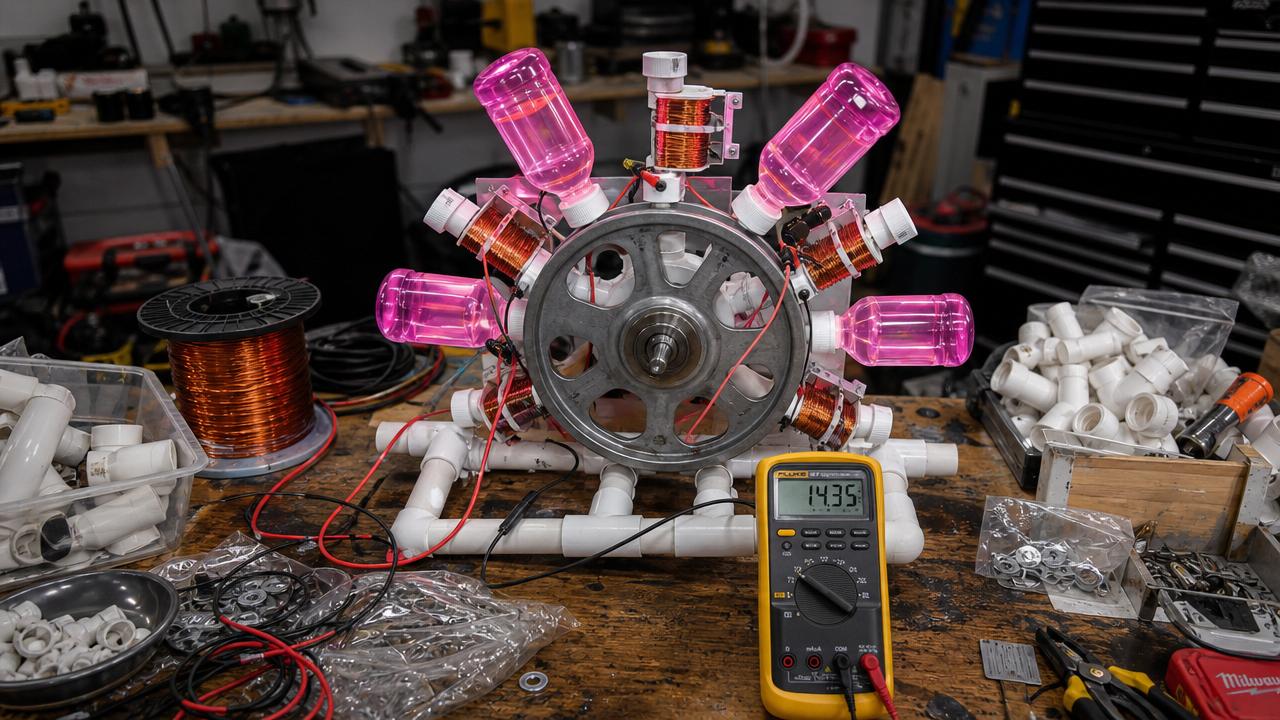
He calls it the Energy Revolution System. And builders are reporting that it keeps their essentials running when the neighborhood goes dark.
Let's be clear about what it is — and isn't.
It will not power your entire mansion like a whole-home generator. It will not take your house completely off-grid on day one. It is not "free energy." What 8,000+ builders report is that a properly assembled unit helps keep the essentials — lights, fridge, furnace fan, phone chargers, medical devices — running during an outage, and can reduce what you pull from the grid day-to-day. Results vary.
Free presentation · No email required · May be pulled at any time
Why it beats a generator for most families
Let's be honest about generators. They're loud, expensive, fuel-dependent, and dangerous if used wrong. Every year, people die from carbon monoxide poisoning because they ran a generator in a garage or near a window. And when a regional storm hits, gas stations run dry — sometimes for days.
The DIY device Michael developed is different. It doesn't burn fuel. It doesn't roar. It doesn't need a $500 installation by a licensed contractor. It sits in your garage or utility room, quietly doing its job, ready when the grid flickers.
| $8,000 Generator | Rooftop Solar + Battery | The DIY Device | |
|---|---|---|---|
| Upfront cost | $6,000 – $12,000+ | $20,000 – $40,000 | ~$200 in parts |
| Fuel needed | Gas / propane | Sunlight | None |
| Noise | Loud | Silent | Silent |
| Installation | Professional | Professional + permits | DIY, one weekend |
| Works when grid is down | Yes — while fuel lasts | Sometimes | Yes |
| Ongoing fuel cost | $30–$100/day | $0 | $0 |
What's inside the free presentation
When you click below, Michael walks you through the whole thing on camera — for free, no credit card, no email required to watch:
- ✓The forgotten Tesla patent (US №512,340) that makes backup power possible without fuel or solar panels
- ✓The exact bifilar coil design and how to wind it — no engineering degree, no math
- ✓A full hardware-store parts list (most builders spend under $200 total)
- ✓Wiring diagrams drawn like IKEA instructions — not a physics textbook
- ✓How to prioritize your essentials: fridge, lights, furnace fan, medical devices, communication
- ✓Safety, thermal, and code-compliance checklists so you build it right the first time
The full build is designed to take a weekend. Michael's oldest builder is 78. His youngest is a 14-year-old working with his dad in Ohio.
Free presentation · No email required · May be pulled at any time
What actual builders are saying
DMDavid M. · Texas
★★★★★ Verified Customer
"I have very little experience with DIY electrical projects and I was skeptical. The guide is incredibly detailed and the diagrams made the assembly straightforward. When we lost power for 14 hours during that ice storm, we had lights and the fridge running. Worth every penny."
TWTed W. · San Diego, CA
★★★★★ Verified Customer
"I got a generator quote for $8,200 and a solar quote for $27k. I built this for under $220. It's not the same as a whole-home generator, but it kept my wife's CPAP and our phones charged during the last outage. For a retiree on a fixed income, it made way more sense."
MRMichael R. · Maryland
★★★★★ Verified Customer
"I've built plenty of home projects and this was one of the more interesting ones. The explanations are clear, the design is modular, and I like that I actually understand what's happening inside the thing I built. Now my neighbors ask me for advice when the grid goes down."
Rated 4.9 / 5 across 8,064 verified customer reviews.
Why the rush? Why "before it's gone"?
Two honest reasons.
First — the presentation itself. Michael's video names the utility model directly and shows a working device built from off-the-shelf parts. Videos like this get flagged, throttled, and pulled from platforms all the time. We don't know how much longer this one stays up. When it's down, it's down.
Second — the price. The full digital blueprint is currently $39 — down from $149 — with a 60-day money-back guarantee processed by ClickBank. If it doesn't work for your situation, you email support and you get a refund. No lawyers. No hoops.
Free presentation · No email required · May be pulled at any time
Watch the presentation. Build it. Test it during your next storm or outage. If it's not for you within 60 days, request a full refund — no questions asked. Processed securely through ClickBank.
Questions readers keep asking
Will this power my whole house like a $8,000 generator?+
No — and it doesn't claim to. It's designed to keep your essentials running during an outage: lights, fridge, furnace fan, phone chargers, medical devices, and communication equipment. For most families, that's what matters during a blackout.
How is it different from a regular generator?+
It doesn't burn fuel, make noise, or require professional installation. You build it once from hardware-store parts, and it's ready whenever the grid drops. It's smaller, quieter, and far cheaper than a conventional generator.
Is this really based on a real Tesla patent?+
Yes. Nikola Tesla's bifilar coil is documented in U.S. Patent №512,340 (1894). It's public record. Michael's build adapts those principles into a modern, hardware-store-parts version a homeowner can assemble.
I'm not handy. Can I really build this?+
The guide is written for total beginners. If you can follow IKEA instructions and hold a screwdriver, you can build it. Average build time is one weekend.
What does it actually cost to build?+
Most builders report spending under $200 on parts at their local hardware store. The blueprint itself is currently $39, reduced from $149.
Will it reduce my power bill?+
Builders report that it can reduce the amount of power pulled from the grid day-to-day, but the primary purpose is emergency backup. Results vary by build, climate, and usage. Be skeptical of anyone promising to zero out your bill.
Is it legal and safe?+
Yes. The device uses standard, well-documented electrical principles. The guide includes safety and code-compliance checklists. As with any home electrical project, follow local codes and consult a licensed electrician if unsure.
What if it doesn't work for me?+
60-day money-back guarantee, processed by ClickBank. Email support, get a refund. That's it.
The bottom line
The grid is not getting more reliable. Storms are getting stronger. Fuel supply chains are getting shakier. And most families are still one blackout away from frozen pipes, spoiled food, and no way to call for help.
You can keep hoping the next outage doesn't hit you. Or you can spend a weekend, ~$200, and put a 130-year-old backup-power idea to work in your own garage.
The presentation is free. Michael walks through the entire device on camera, shows the parts, and explains the build. Whether you buy the blueprint at the end is entirely up to you.
But if you're going to watch it — watch it now. We don't know how long the video stays online.
Free to watch · No credit card required · May be removed at any time